GUIDE
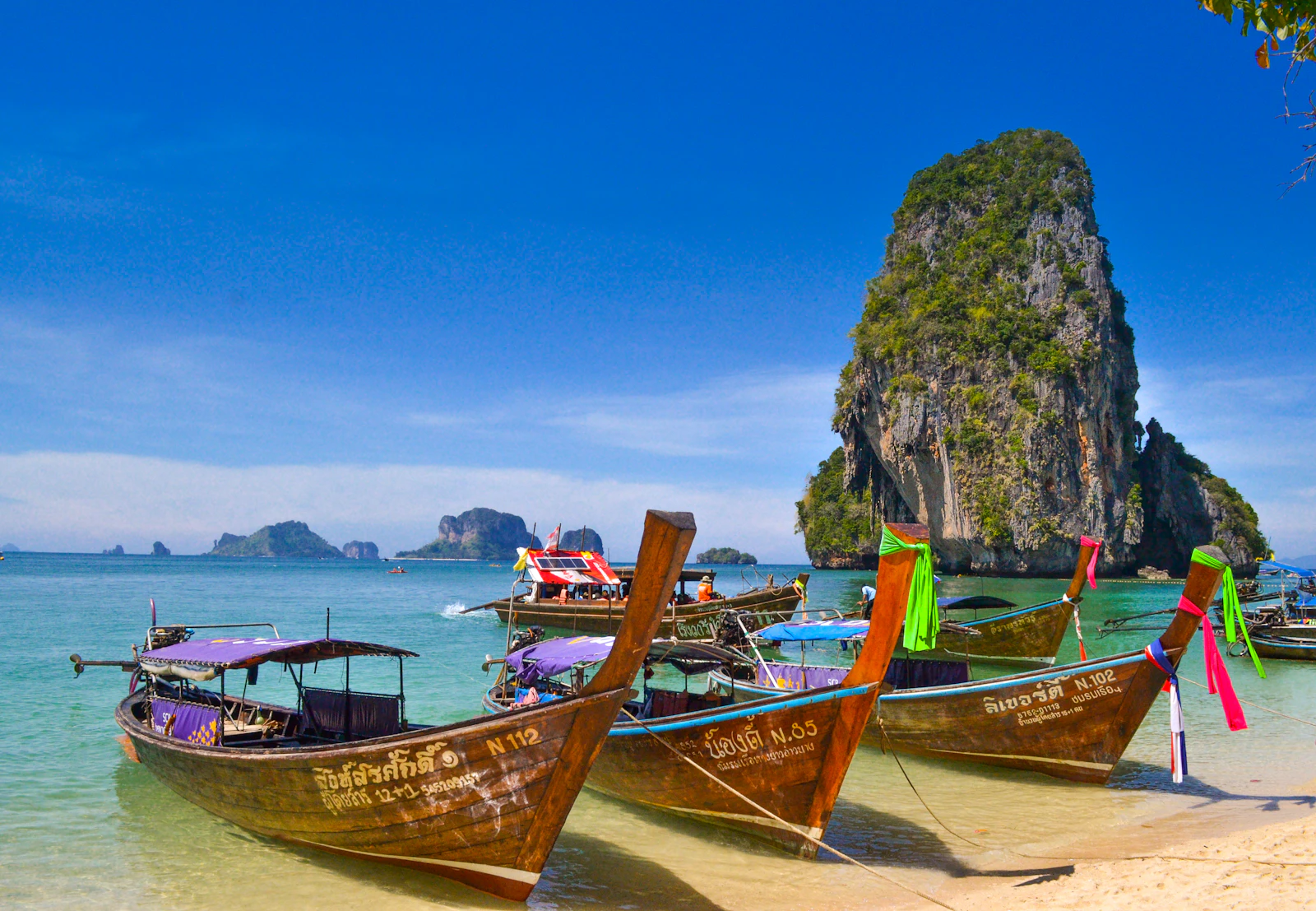
Tropical paradise blending ancient Buddhist culture, limestone karst islands, and warm hospitality.
The cool, dry season from November to February is peak for good reason — comfortable heat, blue skies, calm seas. March to May is punishingly hot. The rainy season (roughly June to October) is greener, cheaper and quieter, with storms that usually pass in an hour; the Andaman coast (Phuket, Krabi) gets wetter than the Gulf side (Koh Samui, Koh Tao) in this window.
The two halves of a classic trip feel like different countries. The north — Chiang Mai and Chiang Rai — is cooler, greener and slower: temples, markets, cooking classes, elephant sanctuaries (choose one with no riding). The south is beaches and boats. Two weeks comfortably covers Bangkok, the north, and one island group; don't try to do both coasts.
Overnight trains between Bangkok and Chiang Mai are a genuine pleasure — book a lower sleeper berth. Buses reach everywhere and are cheap; the government (green) and larger private lines are the safe choice. For the far south, a one-hour flight beats a 12-hour bus. On the islands, songthaews (shared pickups) and scooter rental fill the gaps — only ride a scooter if you already can, and wear the helmet.
Eat at the busy stalls — high turnover means fresh. A plastic stool and a queue of office workers is the best review you'll get. Dress modestly for temples (shoulders and knees covered, shoes off), never touch anyone's head, and don't point your feet at people or Buddha images. A wai (palms together) is returned, not initiated, with elders and monks.
Select any photograph to open it full screen.